
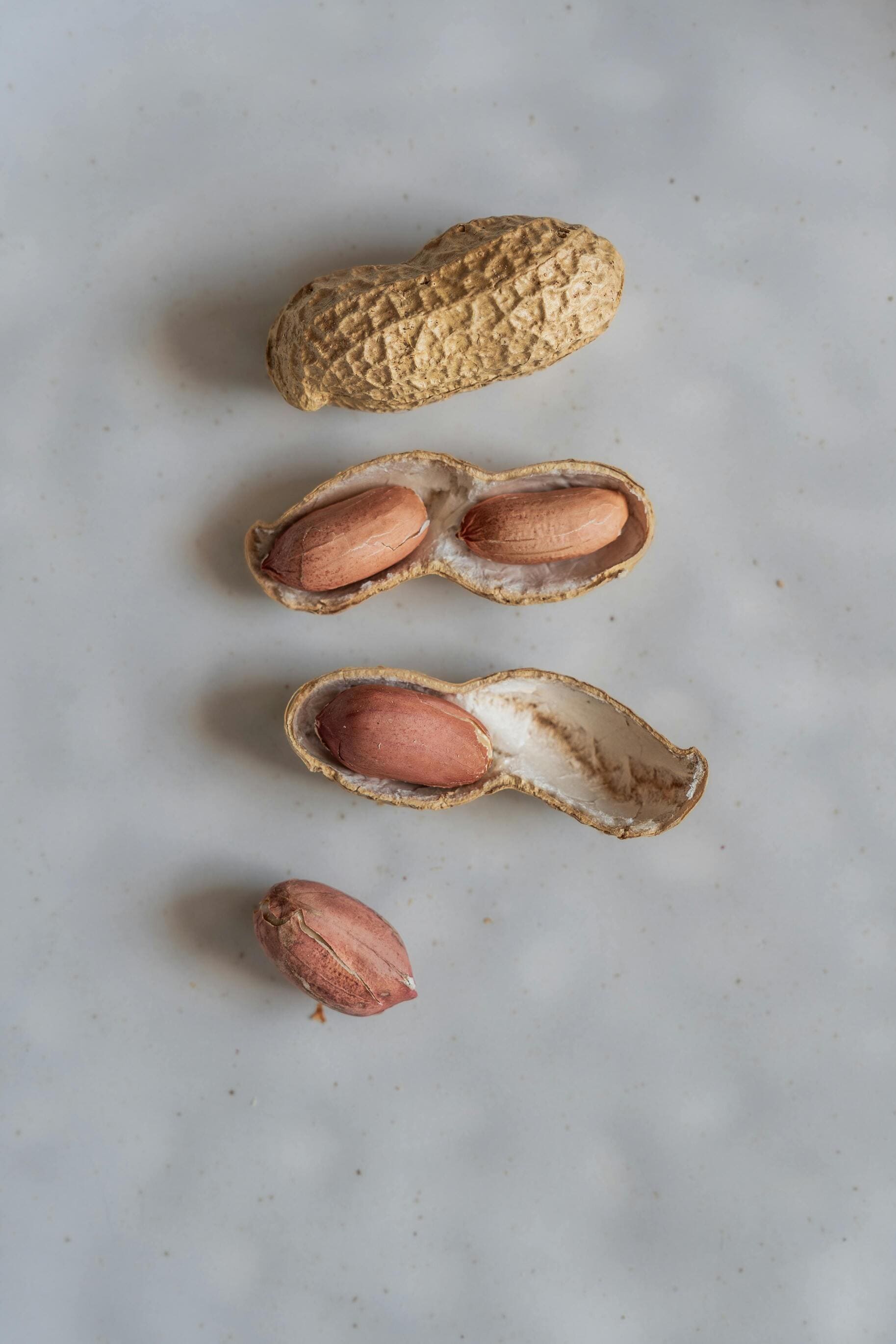
India — The World's #1 Groundnut Exporter
India is the world's largest exporter of groundnuts, accounting for approximately 18 percent of total global peanut exports. India shipped 747,000 metric tonnes valued at USD 795 million in FY 2024–25 — a position no other origin has matched at this scale. Indian groundnuts reach over 178 countries through structured export channels regulated by APEDA (Agricultural and Processed Food Products Export Development Authority).
India's groundnut export advantage is structural — not seasonal. The country operates two harvest cycles per year — the Kharif crop (harvested October to November) and the Rabi crop (harvested March to April). This dual-season availability means Indian groundnuts can be sourced fresh for most of the year, unlike single-harvest origins such as China, Argentina or the United States. For buyers running year-round production lines, this is a meaningful supply continuity advantage.
The export market is highly diversified. Indonesia and Vietnam dominate the volume side for Java variety used in food manufacturing and peanut oil extraction. The European Union (Germany, Netherlands, Belgium) is the leading value market for Bold variety used in premium confectionery. The Middle East buys both varieties for retail snack manufacturing under Halal certification. East African markets (Kenya, Tanzania, Ethiopia) are growing destinations for raw kernels used in local food processing.
Variety Comparison — Bold, Java and TJ
Three primary groundnut varieties are exported commercially from India — Bold 50/60, Java 60/70 and TJ 40/50. Each variety has a distinct kernel size, target market and price tier. Selecting the wrong variety for your application is the most common sourcing error — buyers either over-pay for unnecessary premium grade or specify a grade that fails to meet retail buyer expectations.
All three varieties are available year-round due to India's dual-harvest cycle. Blanched (skin-removed) form is available for all three. Standard purity is 99 percent on commercial grades and 99.95 percent on premium Sortex-cleaned lots. Maximum moisture content is 8 percent for raw shelled kernels.
Processing Forms Available for Export
Indian groundnuts are exported in five distinct processed forms. The right form depends entirely on the buyer's end application — peanut butter manufacturing requires blanched kernels, snack roasters need raw HPS quality, while food fortification customers need defatted peanut flour. Specifying the wrong form leads to additional processing cost or product unsuitability at destination:
Aflatoxin — The Critical Quality Parameter
Aflatoxin contamination is the single most critical food safety concern for groundnut export globally. Aflatoxin is a naturally occurring mycotoxin produced by Aspergillus flavus and Aspergillus parasiticus moulds — fungi that can grow on groundnuts during pre-harvest stress, post-harvest curing or storage. Aflatoxin B1 is classified by the International Agency for Research on Cancer (IARC) as a Group 1 human carcinogen. Every major importing country enforces strict maximum residue limits.
Aflatoxin testing is non-negotiable for export. Any supplier offering Indian groundnuts without batch-specific NABL-accredited aflatoxin test certificates — covering all four fractions (B1, B2, G1 and G2) — should be rejected immediately. Multi-million dollar shipment rejections at EU and US ports between 2019 and 2024 have been driven almost exclusively by aflatoxin non-compliance.
Zenvico Global provides batch-specific NABL-accredited aflatoxin test certificates covering all four fractions (B1, B2, G1 and G2) with every shipment. Segregated low-aflatoxin lots tested below 4 ppb total are maintained specifically for EU buyers. Sampling and testing follows APEDA Peanut.NET protocol — the official Indian government scheme that pre-certifies groundnut consignments for EU eligibility before export. Container Stuffing Certificates are issued at loading port for full traceability.
Quality Parameters — What Your COA Must Show
A credible groundnut COA from India must cover all of the following parameters. Aflatoxin testing must be by HPLC method — ELISA-based screening alone is not sufficient for EU shipments. If a supplier's COA omits aflatoxin testing, heavy metals or pesticide residue — do not accept the shipment.
Export Markets & Specific Requirements
Each major groundnut import market has specific quality, variety and documentation requirements. Meeting these requirements precisely is the difference between smooth clearance and rejection at port:
- European Union (Germany, Netherlands, Belgium) — Strictest market globally. Aflatoxin B1 max 2 ppb and total aflatoxin max 4 ppb mandatory. APEDA Peanut.NET Certificate of Eligibility required for all EU shipments. Kraft paper container lining mandatory. Bold and TJ varieties preferred for confectionery. Blanched kernels in strong demand for peanut butter manufacturing.
- Indonesia & Vietnam — Among the highest volume destinations by tonnage. Java variety dominates for food manufacturing, cooking oil and confectionery. Aflatoxin maximum 10 ppb total acceptable. Less stringent than EU but quality consistency essential. Price-competitive market with year-round demand.
- Middle East & Gulf (UAE, Saudi Arabia, Qatar) — Halal certification preferred (and often required by retail chains). Both Bold and Java traded — Bold for premium retail snacks, Java for food manufacturing. GCC food safety standards apply. Aflatoxin 10 ppb total accepted. High Sortex purity (99.95%) preferred for retail-pack distribution.
- Malaysia & Philippines — Primarily Java variety for satay sauce manufacturing, cooking and confectionery. Price-sensitive market with consistent volume demand year-round. Standard aflatoxin specification acceptable.
- United Kingdom — Post-Brexit MRLs maintained at EU equivalent levels (B1 max 2 ppb, total 4 ppb). Bold variety preferred for premium snack retail. Organic NPOP / NOP certification increasingly in demand from UK wellness sector buyers.
- USA — FDA facility registration required. FSVP (Foreign Supplier Verification Program) compliance mandatory since 2024. FDA aflatoxin action level 20 ppb total — less strict than EU but FDA detentions possible for any breach. Blanched and roasted forms in demand for peanut butter and snack manufacturing.
- East African Markets (Kenya, Tanzania, Ethiopia) — Growing destinations importing raw kernels for local processing into peanut butter, cooking oil and food aid programmes. Standard grade acceptable. Less stringent MRL enforcement. Price-competitive market with developing buyer base.
Certifications and Documentation — Fully Covered
At Zenvico Global, every groundnut shipment is accompanied by complete, batch-specific documentation meeting the requirements of all major global markets. The standard documentation package includes:
- Certificate of Analysis (COA) — Batch-specific from NABL-accredited laboratory. Covers all four aflatoxin fractions (B1, B2, G1, G2) by HPLC, moisture, purity, oil content, FFA, heavy metals (ICP-MS), pesticide residue (GC-MS / LC-MS) and microbiology (Salmonella, TPC, E. coli).
- APEDA Phytosanitary Certificate — Issued by Plant Quarantine Authority of India. Required for all export destinations.
- APEDA Peanut.NET Certificate of Eligibility — Mandatory for EU shipments. Confirms aflatoxin pre-screening compliance under the official Indian government scheme.
- Container Stuffing Certificate — Issued at loading port. Confirms proper container condition, kraft paper lining (for EU lots), and weight verification.
- FSSAI Certificate — Food Safety and Standards Authority of India processing facility certification.
- Certificate of Origin — Required for all destinations. Applicable for preferential tariff rates under India's trade agreements.
- Halal Certificate — Available on request for Middle East and Southeast Asian markets.
- Organic Certificate (NPOP / NOP / EU Organic) — Available on request for certified organic lots with transaction certificate per shipment.
- Commercial Invoice, Packing List and Bill of Lading — Full original document set provided within 24 hours of BL date.
Commercial Terms at a Glance
Get a Quote for Indian Groundnuts
All varieties — Bold, Java and TJ. All forms — raw, blanched, split, roasted, flour. NABL aflatoxin COA with every shipment. APEDA Peanut.NET for EU. FOB or CIF pricing within 24 hours.
Related Oilseed & Agricultural Products from India
Groundnuts are one of over 27 agricultural products we export from India. Browse related oilseeds, spices and nutraceuticals — all with complete documentation and NABL lab COA:
- Groundnuts (Peanuts) — Bold 50/60, Java 60/70, TJ 40/50 · aflatoxin tested EU food grade
- White Sesame Seeds — natural & hulled · 99.95% Sortex · Salmonella tested
- Black Sesame Seeds — natural & hulled · for Japan, Korea, EU markets
- Castor Seeds — 45–50% oil content, non-GMO
- Turmeric — Finger & Powder — Erode to Lakadong · Curcumin 2–12% by HPLC
- Cumin Seeds — Unjha Quality — EQ grade, EU MRL, Spices Board OSCS
- Coriander Seeds & Powder — 99% purity, EU MRL compliant
- Dried Chilli — Teja & Byadagi — ASTA 100+, EU MRL compliant
- Moringa Powder — food grade, supplement, organic · NABL COA
- Dehydrated Onion — Flakes & Powder — FSSC 22000, EU pesticide screen
- Dehydrated Garlic — Flakes & Powder — high allicin, FSSC 22000
- Basmati Rice — 1121 Extra Long — APEDA, GI Protected, Phyto