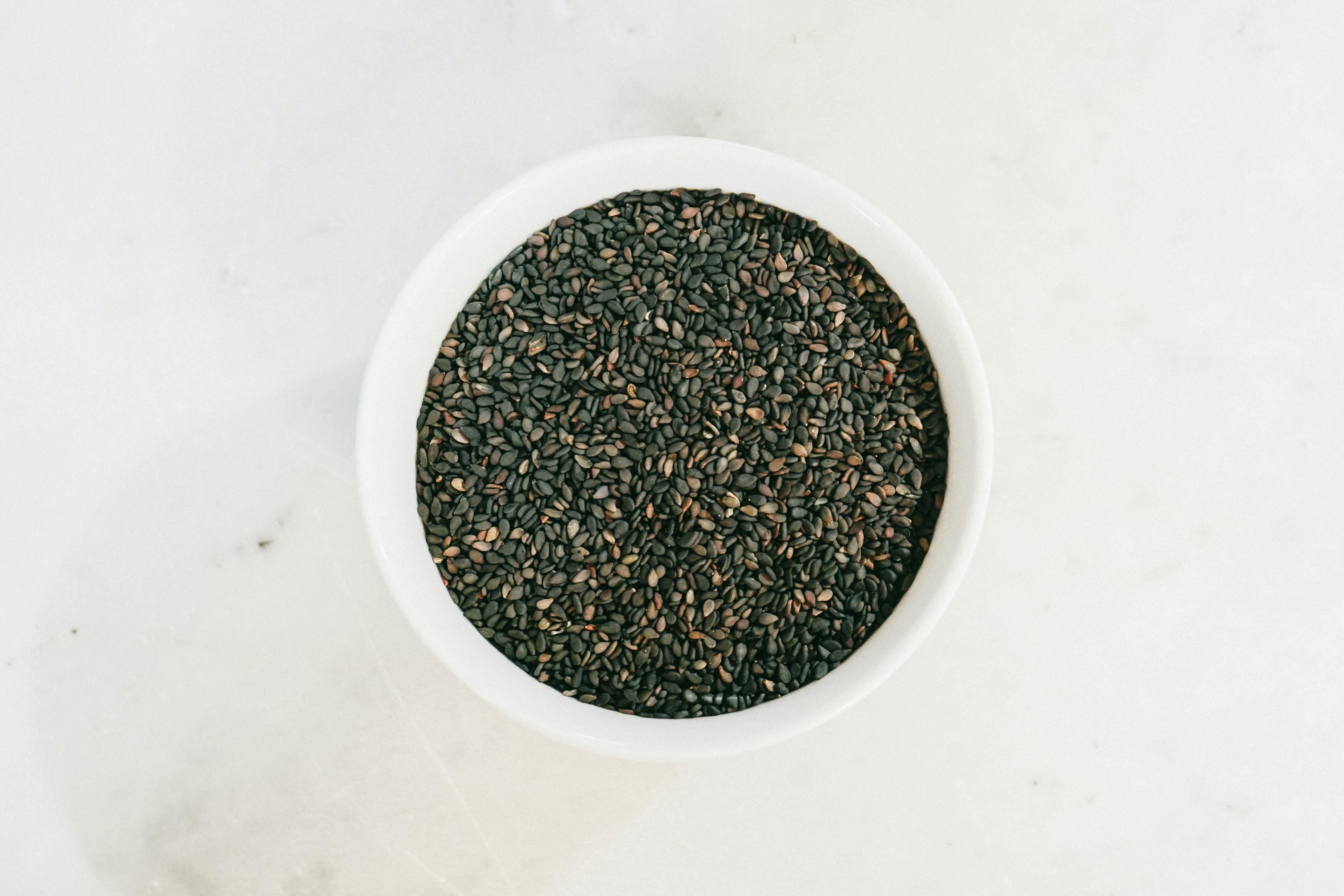
India — The World's Top Sesame Seed Exporter
According to the India Brand Equity Foundation (IBEF), India is the top global exporter of sesame seeds. India shipped USD 491.45 million worth of sesame in FY 2024–25 and a further USD 103.96 million in the first quarter of FY 2025–26 alone. Sesame accounts for the dominant share of India's seed exports — generating approximately USD 497 million of the USD 564 million total seed export value in 2024.
Indian sesame is exported to more than 100 countries. The leading destinations include South Korea, the United States, Vietnam, Russia, Israel, Saudi Arabia, Iraq, Indonesia, Canada, Greece, Japan, the United Arab Emirates and Turkey. The market is structurally diversified — no single country accounts for a majority share — which gives reliable supply-side stability for buyers across regions.
Indian sesame benefits from three sowing seasons — Kharif (June to August), Rabi (October to December) and Summer (February to March) — which means fresh-harvest sesame is available year-round rather than only after a single annual crop window. This dual-season availability is a meaningful supply advantage over single-harvest origins like Ethiopia or Sudan, particularly for buyers requiring consistent year-round contracts.
Variety Comparison — White, Black, Hulled and Natural
Indian sesame is exported in four primary commercial forms. Each form has distinct buyer markets, end applications and price premiums. Selecting the wrong form for your application leads to either over-paying for unnecessary processing or under-specifying for a market that requires it.
Hulled sesame undergoes soaking, friction hulling and drying to remove the outer seed coat. This process delivers a brighter appearance, milder flavour and improved digestibility — but it also reduces shelf life and increases susceptibility to oxidation. Hulled sesame must be stored at lower temperatures and used faster than natural sesame. Buyers sourcing for long-warehouse turnaround should account for this in inventory planning.
Quality Parameters — What Your COA Must Show
A credible sesame seed COA from India must cover all of the following parameters. Salmonella, pesticide residue and aflatoxin testing are the three most critical parameters for export markets. If any of these are missing from a supplier's COA — do not accept the shipment.
Salmonella — The Critical Quality Parameter
Salmonella contamination is the single most critical food safety concern for sesame seed export globally. The European Union, USA, Japan and Australia operate zero-tolerance Salmonella standards — any positive detection results in immediate shipment rejection at the destination port. Major rejection events at EU and USA ports between 2019 and 2023 cost Indian and African suppliers tens of millions of dollars in returned shipments and reputational damage.
Salmonella in sesame typically originates from environmental contamination during harvest, drying or storage. Birds, rodents and improper threshing are common contamination vectors. The international standard is Salmonella absent in 25 grams, tested by ISO 6579 method at an accredited laboratory. Some buyers — particularly in Japan and Germany — require additional Listeria and E. coli O157:H7 testing.
Two technical solutions exist for high-risk Salmonella markets:
- Steam pasteurisation — controlled steam treatment that eliminates Salmonella while preserving germination and oil quality. Now standard for export to Germany, Japan and the USA. Adds approximately USD 80–120 per metric tonne to processing cost but eliminates Salmonella rejection risk.
- RTE (Ready-to-Eat) grade certification — a higher tier of processing and testing required by Japanese buyers for sesame intended for direct consumption without further heat treatment. Requires steam pasteurisation plus enhanced microbiological testing.
Zenvico Global supplies sesame with batch-specific Salmonella test certificates from NABL-accredited laboratories. Steam pasteurised lots and RTE-grade sesame are available on request for buyers in Japan, the USA, Germany and other zero-tolerance markets.
Export Markets & Specific Requirements
Each major sesame import market has specific quality, processing and documentation requirements. Meeting these requirements precisely is the difference between smooth clearance and detention or rejection at port:
- South Korea — Among India's top destinations by both volume and value. Korean buyers prefer hulled white sesame for traditional cuisine and roasted black sesame for desserts. National tender system operates seasonally. Strict quality and Salmonella standards apply. Premium pricing for consistent quality suppliers.
- United States — One of India's largest export destinations for sesame. FDA facility registration mandatory. FSVP (Foreign Supplier Verification Program) compliance required since 2024. Both hulled white (for bakery and energy bars) and natural white (for tahini and oil) in strong demand. Salmonella zero-tolerance standard applies.
- Japan — Most demanding market globally for sesame quality. RTE (ready-to-eat) grade with steam pasteurisation mandatory for direct-consumption applications. Japan's positive list system for pesticide residue applies — any pesticide not on the approved list defaults to 0.01 ppm MRL. Black sesame is preferred for furikake and goma-ae. Consistent supplier reliability is more valued than lowest price.
- European Union — Strict pesticide MRL enforcement per Regulation EC 396/2005. Ethylene oxide (ETO) banned with maximum residue limit of 0.05 mg/kg — phosphine fumigation must be used instead. Salmonella zero-tolerance. EU Rapid Alert System for Food and Feed (RASFF) actively monitors sesame imports. Aflatoxin maximum 4 ppb total. Germany, Greece and the Netherlands are leading EU destinations.
- Middle East & Gulf — Saudi Arabia, the United Arab Emirates, Iraq and Israel are significant destinations. Halal certification preferred (and often required by retail buyers). Both white and black sesame traded — white predominates for halva and tahini production, black for traditional medicine and bakery. GCC food safety standards apply.
- Vietnam & Indonesia & Malaysia — High-volume Southeast Asian destinations. Primarily natural white sesame for oil extraction and food manufacturing. Less stringent testing requirements than EU/USA but quality consistency remains essential. Price-competitive market.
- Russia, Turkey & CIS — Significant volumes of natural white sesame for halva production. Turkish halva industry is one of the world's largest sesame consumers. Generally accepting of standard 99% Sortex grade. Established trade channels through historical commercial relationships.
Certifications and Documentation — Fully Covered
At Zenvico Global, every sesame seed shipment is accompanied by complete, batch-specific documentation meeting the requirements of all major global markets. The standard documentation package includes:
- Certificate of Analysis (COA) — Batch-specific from NABL-accredited laboratory. Covers purity, moisture, oil content, FFA, foreign matter, Salmonella (ISO 6579), E. coli, total plate count, aflatoxin (HPLC), heavy metals (Pb, Cd, As, Hg by ICP-MS), pesticide residue screen (GC-MS / LC-MS) and ethylene oxide (ETO).
- FSSAI Certificate — Food Safety and Standards Authority of India processing facility certification.
- APEDA Registered Exporter Status — Agricultural and Processed Food Products Export Development Authority registration confirms exporter authorisation under Indian export regulation.
- Phytosanitary Certificate — Issued by Plant Quarantine Authority of India. Required for all export destinations.
- Certificate of Origin — Required for all destinations and applicable for preferential tariff rates under India's trade agreements.
- Steam Pasteurisation Certificate — Available for buyers in Japan, USA, Germany and other zero-tolerance Salmonella markets.
- Halal Certificate — Available on request for Middle East and Southeast Asian markets.
- Kosher Certificate — Available on request for the USA and European Jewish market distribution.
- Organic Certificate (NPOP / NOP / EU Organic) — Available on request for certified organic lots with transaction certificate per shipment.
- Commercial Invoice, Packing List and Bill of Lading — Full original document set provided within 24 hours of BL date.
Commercial Terms at a Glance
Get a Quote for Indian Sesame Seeds
All forms — white, black, hulled, natural. 99.95% Sortex purity. Salmonella tested with NABL COA. Steam pasteurised and RTE grades available. FOB or CIF pricing within 24 hours.
Related Oilseed & Agricultural Products from India
Sesame is one of over 27 agricultural products we export from India. Browse related oilseeds and agricultural products — all with complete documentation and NABL lab COA:
- White Sesame Seeds — natural & hulled · 99.95% Sortex purity · Salmonella tested · Halal on request
- Black Sesame Seeds — natural & hulled · for Japan, Korea, EU markets · NABL COA
- Groundnuts (Peanuts) — Bold 50/60, Java 60/70, aflatoxin tested EU food grade
- Castor Seeds — 45–50% oil content, non-GMO
- Turmeric — Finger & Powder — Erode to Lakadong · Curcumin 2–12% by HPLC
- Cumin Seeds — Unjha Quality — EQ grade, EU MRL, Spices Board OSCS
- Coriander Seeds & Powder — 99% purity, EU MRL compliant
- Dried Chilli — Teja & Byadagi — ASTA 100+, EU MRL compliant
- Moringa Powder — food grade, supplement, organic · NABL COA
- Dehydrated Onion — Flakes & Powder — FSSC 22000, EU pesticide screen
- Dehydrated Garlic — Flakes & Powder — high allicin, FSSC 22000
- Basmati Rice — 1121 Extra Long — APEDA, GI Protected, Phyto