Copper Cathode vs Copper Rod — Which to Buy
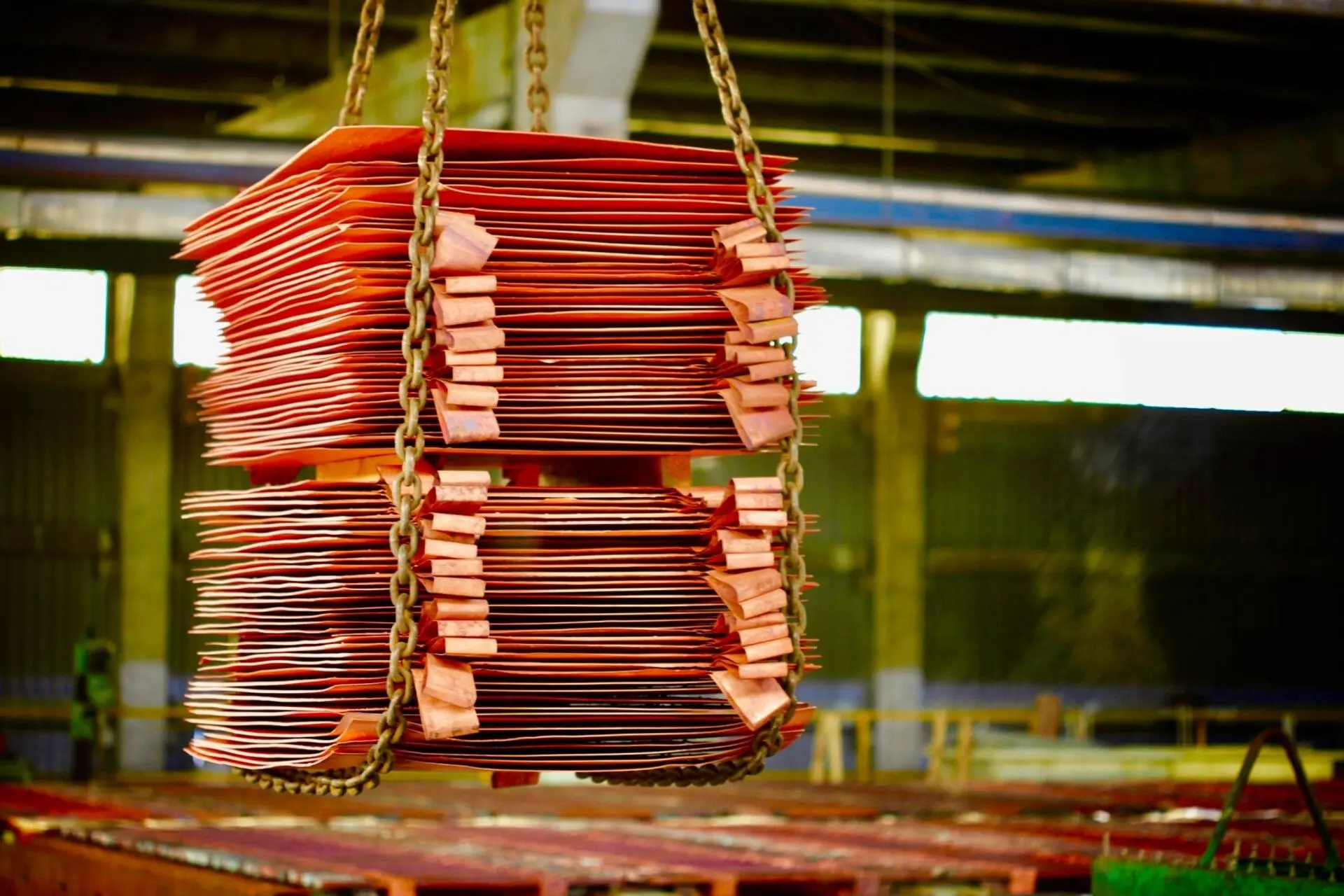
The first decision for any copper buyer is form. Cathode and rod are different stages of the same supply chain, and buying the wrong one means either paying an unnecessary conversion premium or buying material you cannot process:
If you operate a continuous cast rod line, buy cathode and avoid the conversion premium. If you draw wire directly from rod, buy ETP rod. Buying cathode without melting capability leaves you with material you cannot use; buying rod when you have a rod mill means paying twice for the same conversion.
LME Grade A — What the Standard Actually Requires
LME Grade A is the copper cathode quality standard set by the London Metal Exchange, corresponding to BS EN 1978:1998 (Cu-CATH-1) and broadly equivalent to ASTM B115 Grade 1. It is the international benchmark that wire rod and cable manufacturers specify by default. The requirement is not simply "99.99% copper" — it sets specific ceilings on individual impurity elements, because certain trace elements degrade electrical conductivity and hot-working behaviour far out of proportion to their concentration.
Only cathode produced under brands registered and approved by the LME may be delivered against LME contracts. For buyers, the practical implication is simple: request the Mill Test Certificate showing the actual assay against these limits, not merely a supplier statement that material is "99.99% pure". A cathode meeting overall copper content but breaching the bismuth or selenium ceiling will cause wire breaks at the drawing stage.
ETP Copper Rod — Specifications and Conductivity
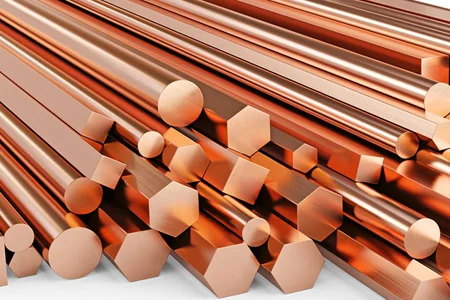
ETP stands for Electrolytic Tough Pitch copper, designated Cu-ETP or UNS C11000. It is the standard conductor-grade copper rod worldwide, produced by continuous cast and rolling from cathode. The defining characteristic is a controlled oxygen content — enough to scavenge impurities into oxides, but low enough to avoid embrittlement:
IACS — International Annealed Copper Standard — is the conductivity benchmark. 100% IACS is the reference conductivity of pure annealed copper; well-produced ETP rod meets or slightly exceeds this. If a supplier cannot state IACS conductivity on the Mill Test Certificate, treat that as a red flag: for wire and cable manufacturers, conductivity is the single most commercially important property of the material.
How Copper Is Priced — LME Plus Premium
Copper is not quoted at a fixed price. It is an exchange-traded commodity, and every credible copper offer is structured as LME price plus a premium. Buyers new to copper sometimes compare a fixed-price offer against an LME-linked offer and reach the wrong conclusion; understanding the structure is essential:
Always agree the quotational period in writing before the order is confirmed. Two offers with identical premiums but different QPs are not the same offer — in a volatile copper market the QP can move the landed cost more than the premium does. Zenvico Global confirms the QP and premium structure at the time of quotation.
Mill Test Certificate — The Document That Protects You
A Mill Test Certificate (MTC) is the quality document issued by the producing plant, confirming the actual chemical assay of the material supplied against the applicable standard. For copper, the MTC is the only meaningful verification that the material meets LME Grade A or ETP specification — visual inspection tells you almost nothing about impurity content.
Zenvico Global provides the original Mill Test Certificate with every copper shipment. Third-party pre-shipment inspection by SGS, Bureau Veritas or Intertek — covering independent sampling, chemical analysis, weight verification and packing condition — is available on request and is strongly recommended for first-time transactions and high-value consignments.
Export Markets & Specific Requirements
Copper buyers differ significantly by market in what they specify and what documentation they require:
- European Union — BS EN 1978 (cathode) and BS EN 1977 (rod) are the referenced standards. RoHS compliance documentation is commonly requested for material entering electrical equipment supply chains. EU buyers frequently require independent third-party inspection at load port as standard practice.
- Middle East & Gulf — Very strong demand from cable manufacturing, driven by construction and infrastructure. ETP rod in 8mm is the dominant requirement. Certificate of Origin attestation by the destination embassy is required in some Gulf markets.
- Southeast Asia — Major cable and wire manufacturing base, with substantial demand for both cathode (for local rod mills) and ETP rod. Price-competitive market where premium structure matters as much as base LME.
- United States — ASTM B115 (cathode) and ASTM B49 (rod) referenced. Customs entry via licensed Customs Broker required. Country-of-origin marking mandatory. Buyers commonly specify LME-registered brands.
- Africa — Growing demand for ETP rod from expanding cable manufacturing capacity. Letter of Credit is the common payment instrument; pre-shipment inspection frequently required by both buyer and destination customs authorities.
Certifications and Documentation — Fully Covered
Every copper shipment from Zenvico Global is accompanied by complete documentation:
- Mill Test Certificate (MTC) — Original plant certificate showing full chemical assay against BS EN 1978 (cathode) or ASTM B49 (rod), with conductivity in % IACS for rod.
- Third-Party Inspection Certificate — SGS, Bureau Veritas or Intertek pre-shipment inspection available on request. Covers independent sampling, chemical analysis, weight verification and packing condition.
- Weight Certificate — Bundle-by-bundle or coil-by-coil net and gross weight breakdown, independently verified at load port.
- Certificate of Origin — Required for all destinations. Applicable for preferential tariff rates under India's trade agreements. Embassy attestation arranged where required.
- RoHS Declaration — Available on request for buyers supplying into European electrical equipment supply chains.
- Commercial Invoice, Packing List and Bill of Lading — Full original document set provided within 24 hours of BL date.
Commercial Terms at a Glance
Get a Quote for Copper from India
LME Grade A cathode and ETP rod 8mm. Mill Test Certificate with every shipment. Third-party inspection available. LME-linked pricing confirmed within 24 hours.
Related Metals Products from India
Copper is one of 19 metals products we export from India. Browse related non-ferrous metals, ferro alloys and steel — all with Mill Test Certificates and full documentation:
- Copper Cathode — LME Grade A · Cu 99.99% · BS EN 1978
- Copper ETP Rod 8mm — Cu-ETP / C11000 · min 100% IACS
- Aluminium Alloys — 6061 / 7075 / 2024 · T6 temper
- Zinc Ingots — SHG 99.99% · Mill certificate
- Lead Ingots — 99.97% · Mill certificate
- Silicon Manganese — SiMn 6517 — Mn 65%, Si 17%, SGS inspected
- Ferro Manganese HC — Mn 74%+, SGS inspected
- Ferrochrome HC — Cr 65%+, SGS inspected
- Stainless Steel SS 304 — ASTM A240 · MTC provided
- Stainless Steel SS 316 — Marine grade · Mo-bearing
- Mild Steel HR Coils — IS 2062 / ASTM A36 · MTC provided