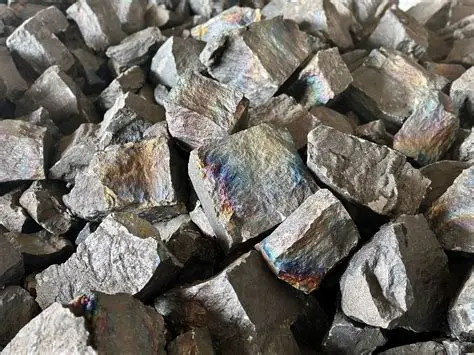
Ferrochrome in high, medium and low carbon grades at 60–65% chromium, plus charge chrome for bulk stainless production. Cr:Fe ratio stated on certificate, sized 10–150mm, with SGS chemistry and screen analysis at load port.
Ferrochrome is graded by carbon, and carbon determines which stainless grades it can feed. High carbon FeCr is the volume product for standard stainless; low carbon exists because some grades cannot tolerate carbon pickup at all.
Charge chrome is worth knowing about: it carries lower chromium at 50 to 55 percent and correspondingly lower price, and it is the standard feed for bulk stainless production where the chromium can be made up in the melt. If your calculation is cost per unit of contained chromium rather than per tonne, it often wins.
Chromium percentage gets the attention, but the chrome-to-iron ratio matters in furnace practice because it affects how much iron you are carrying into a melt that may already have enough.
If you are running a tight melt balance, ask for the Cr:Fe ratio on the certificate rather than chromium percentage alone.
On specifications: the figures above reflect standard industry specifications for this product. Your actual batch values are confirmed on the Mill Test Certificate or Certificate of Analysis issued against your specific lot — provided with every shipment, and with sample orders before you commit to bulk. We do not ask buyers to take a specification on trust.
Ferrochrome is a high-value bulk commodity where independent load-port verification is standard practice.
HS Code 7202.41 (FeCr, carbon above 4%) · 7202.49 (other FeCr). Packing in 1 MT jumbo bags or bulk.
MOQ is discussed at order stage. Pricing normally on a chromium content basis with adjustment clauses. Payment by advance TT, LC at sight, or DP/DA case by case.
Charge chrome carries lower chromium, typically 50 to 55 percent against 60 to 65 percent for HC ferrochrome, at correspondingly lower price. It is the standard feed for bulk stainless production where chromium can be made up in the melt. If your calculation is cost per unit of contained chromium rather than price per tonne, charge chrome frequently wins.
It is the ratio of chromium to iron in the alloy, typically 2.0:1 to 2.8:1 for HC ferrochrome. Chromium percentage gets most of the attention, but the ratio tells you how much iron you are carrying into the melt per unit of chromium added. If you are running a tight melt balance, ask for Cr:Fe on the certificate rather than chromium alone.
When the stainless grade you are producing cannot tolerate carbon pickup, typically low-carbon 304L and 316L type grades and specialty alloys. LC FeCr holds carbon to a maximum of 0.10 to 0.50 percent against 4 to 8 percent in HC. It carries a substantial premium, so use it only where the grade genuinely requires it.
Standard HC ferrochrome holds phosphorus to a maximum of 0.03 percent and sulphur to 0.05 percent. Both carry through into the steel as tramp elements. If your stainless grade has tight residual specifications, state tighter maxima at enquiry stage rather than relying on the standard figures.
Ferro-chromium containing more than 4 percent carbon is exported under HS Code 7202.41. Other ferro-chromium, including medium and low carbon grades, falls under HS Code 7202.49. We declare the correct code based on the grade ordered.
Yes. Ferrochrome is high value by container and independent inspection at load port is standard practice. SGS, Bureau Veritas or Intertek verify chemistry, Cr:Fe ratio, screen analysis and weight before the cargo sails, which removes most grounds for dispute on arrival.
Technical drawings welcome. FOB or CIF pricing within 24 hours. Third-party inspection available.
Technical drawings welcome. FOB or CIF pricing, samples available.
Request Quote → 💬 WhatsApp +91-9066444896