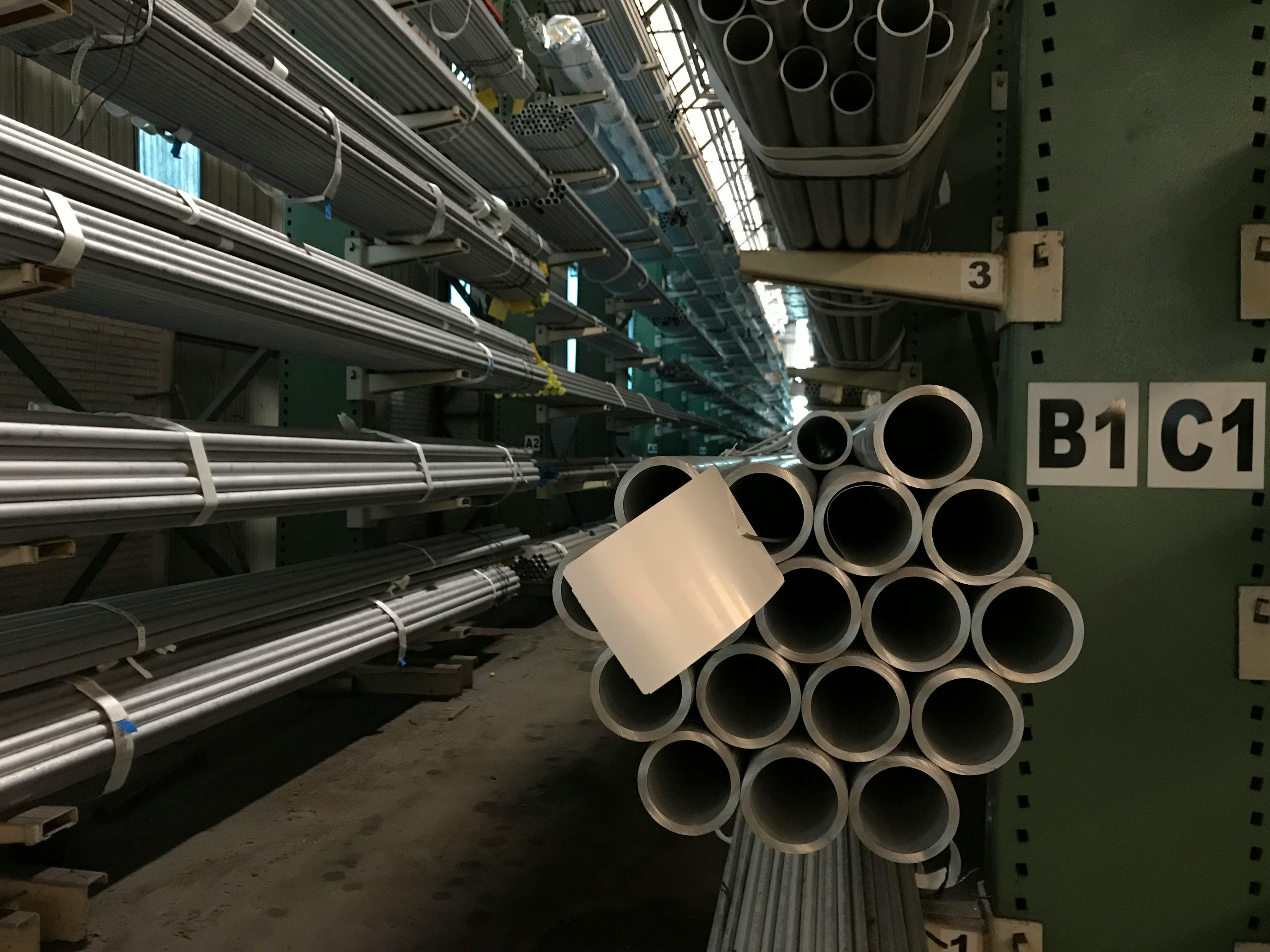
Why SS 316 is Specified Over SS 304
The critical difference between SS 316 and SS 304 is molybdenum — SS 316 contains 2-3% Mo which dramatically improves resistance to chloride-induced pitting and crevice corrosion. In environments containing chloride ions (seawater, salt spray, chlorinated cleaning chemicals, hydrochloric acid solutions, food salt) SS 304 may suffer pitting corrosion while SS 316 remains passive and corrosion-free.
This makes SS 316 the mandatory specification for: marine and offshore equipment, coastal architectural features, food processing with salt brines, pharmaceutical bioreactors and fermenters, pulp and paper chemical recovery, seawater desalination and swimming pool components.
This makes SS 316 the mandatory specification for: marine and offshore equipment, coastal architectural features, food processing with salt brines, pharmaceutical bioreactors and fermenters, pulp and paper chemical recovery, seawater desalination and swimming pool components.
316 vs 316L — When to Use Each
SS 316 — Standard carbon (max 0.08% C). For applications not involving heavy welding or where post-weld heat treatment is performed. Slightly higher strength than 316L.
SS 316L — Low carbon (max 0.03% C). For welded fabrications where sensitisation must be avoided — pressure vessels, pharmaceutical bioreactors, food processing vessels. The preferred grade for most welded applications. In practice, most buyers specify 316L as a conservative choice.
SS 316L — Low carbon (max 0.03% C). For welded fabrications where sensitisation must be avoided — pressure vessels, pharmaceutical bioreactors, food processing vessels. The preferred grade for most welded applications. In practice, most buyers specify 316L as a conservative choice.
Coastal and Marine Applications
The single largest driver of SS 316 specification is proximity to the sea. Architecture within 5km of the coast routinely specifies 316L for balustrades, handrails, facade cladding, light fixtures and street furniture — all of which would pit and stain in SS 304 due to chloride salt deposition from sea spray. Offshore oil and gas platforms, marine vessel components, desalination plant internals and aquaculture equipment all mandate SS 316L.
Documentation
MTC EN 10204 3.1 with Mo content verification, ASTM A240 Certificate of Compliance, IGC Test (intergranular corrosion) for 316L where specified, Certificate of Origin, SGS Weight Certificate, Packing List and Bill of Lading.
Ready to Source?
Get a Quote for Stainless Steel 316 Sheets Export from India — Marine Grade
Technical drawings welcome. FOB or CIF pricing within 24 hours. Third-party inspection available.
Related Products
Get a Quote in 24 Hours
Technical drawings welcome. FOB or CIF pricing, samples available.
Request Quote → 💬 WhatsApp +91-9066444896Certifications
ASTM A240 EN 1.4401 / 1.4404 Jindal Stainless Origin MTC EN 10204 3.1 Mo 2-3% Certified SGS Available
HS Code
7219.32
India Origin
Export Ready
Export Ready