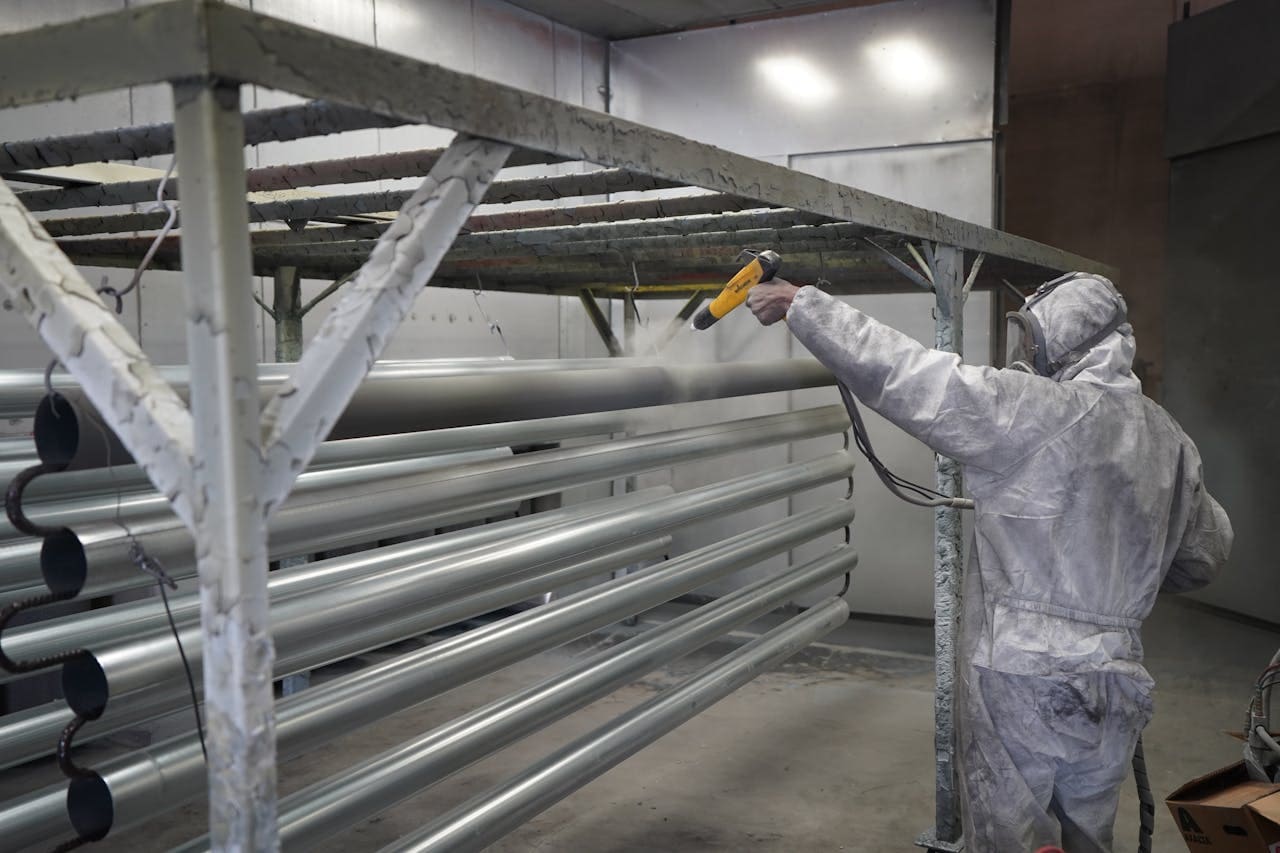
Polyester, epoxy and two-coat powder systems on steel, galvanised steel and aluminium in the full RAL range, with proper pre-treatment and film thickness, adhesion and salt spray testing.
The powder chemistry decides where a coated part can live. Using the wrong one is the most common powder coating failure, and it usually shows as chalking and fading within a year outdoors.
Epoxy gives excellent chemical and corrosion resistance but degrades in UV light. Anything going outdoors needs a polyester topcoat. For coastal or industrial environments, a two-coat system with zinc-rich or epoxy primer is the robust choice.
Powder coating adhesion and corrosion life depend almost entirely on surface preparation. A thick coat over a poorly prepared surface will still fail early.
Specify the pre-treatment as well as the colour. Two parts in the same RAL colour can last years apart depending on what happened before the powder went on.
On specifications: the capabilities above reflect standard specifications for this process. Achievable tolerances and finishes for your part depend on geometry, material and quantity, and are confirmed at quotation after drawing review. Every first article ships with a full dimensional inspection report against your drawing, plus Material Test Certificates for the raw material. We do not ask buyers to take a capability claim on trust.
Powder coating is normally supplied as part of a component order, under the HS code for that component.
MOQ is discussed at order stage based on part complexity and material. Payment by advance TT, LC at sight, or DP/DA case by case.
Polyester, or super-durable polyester for long-life architectural use. Epoxy powders give excellent chemical and corrosion resistance but chalk and fade in sunlight, so they suit indoor parts only. For coastal or industrial outdoor service, a two-coat system with an epoxy or zinc-rich primer under a polyester topcoat is the robust choice.
Adhesion and corrosion life depend mostly on surface preparation. Degreasing, phosphating or zirconium conversion, and shot blasting where needed, create the surface the powder bonds to. A thick coat over a poorly prepared surface will still fail early, so specify pre-treatment as well as colour.
Typically 60 to 120 micrometres for a single coat. Thicker is not automatically better, since excess thickness can crack on impact and affect fits. For demanding environments, a two-coat system is more effective than one very thick coat.
Yes, and the combination gives very long corrosion life, but galvanised steel needs specific preparation. Without it, gas trapped in the zinc can escape during curing and leave pinholes. State that parts are galvanised so the right process is used.
To a RAL reference or an agreed physical sample, with gloss level and texture specified separately. Colour is approved before production, since the same RAL code can look slightly different between powder suppliers.
ISO 12944 defines corrosivity categories from C1 indoor to C5 and CX severe, and the coating system is chosen to match. Qualicoat certification applies to architectural aluminium. Specify the corrosivity category for your environment.
Technical drawings welcome. FOB or CIF pricing within 24 hours. Third-party inspection available.
Technical drawings welcome. FOB or CIF pricing, samples available.
Request Quote → 💬 WhatsApp +91-9066444896