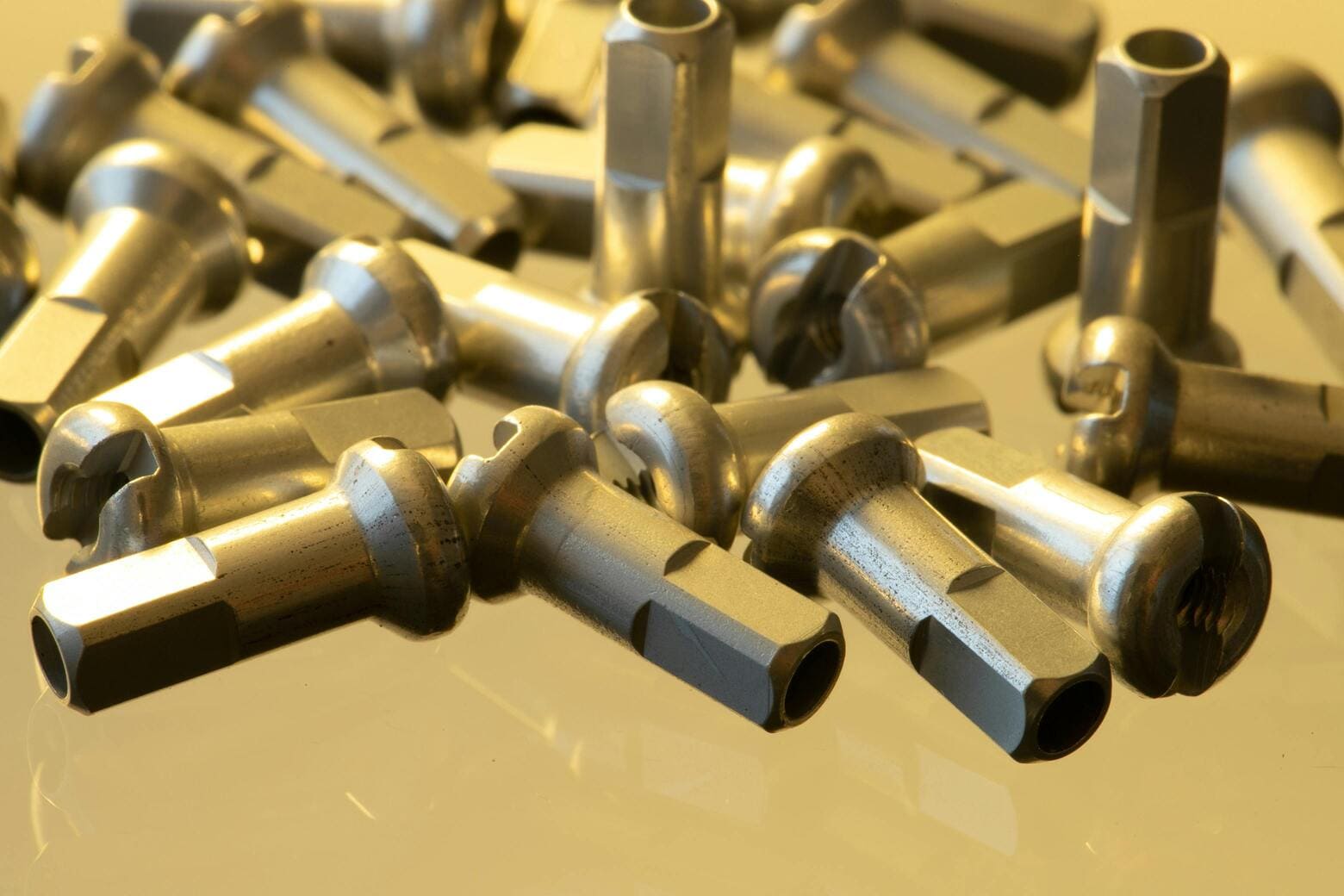
Anodizing for Aerospace and Industrial Applications
Anodizing is an electrochemical process that converts the surface of aluminium into a hard, durable aluminium oxide layer. Unlike paint or plating, the anodic layer is integral to the base material — it cannot peel, chip or flake. This makes it the preferred surface treatment for aerospace structures, defence components, automotive trim and consumer electronics.
Type II conventional anodizing produces a porous 5-25 um coating suitable for decorative and mild corrosion protection applications. Type III hardcoat anodizing produces a dense 25-75 um coating with hardness equivalent to 60-70 HRC — used for wear surfaces, sliding components, hydraulic cylinder bores and bearing housings in harsh environments.
Type II conventional anodizing produces a porous 5-25 um coating suitable for decorative and mild corrosion protection applications. Type III hardcoat anodizing produces a dense 25-75 um coating with hardness equivalent to 60-70 HRC — used for wear surfaces, sliding components, hydraulic cylinder bores and bearing housings in harsh environments.
Alloy-Specific Processing
Not all aluminium alloys anodize identically. High-copper alloys (2000 series) and high-zinc alloys (7000 series) require modified bath chemistry and tighter process control to achieve uniform colour and coating thickness. Our NADCAP-capable partners have developed alloy-specific anodizing processes for 2024-T3, 7075-T6 and other aerospace alloys commonly specified in defence and aviation programmes.
Precision Masking
For components requiring precise masking — threaded holes, bearing bores, mating surfaces and electrical contact areas — we provide precision masked anodizing using custom tooling. This ensures dimensional integrity of critical features while protecting the bulk surface.
Documentation
Anodize Process Certificate (MIL-A-8625), Coating Thickness Report (by eddy current gauge), Dimensional Inspection Report post-anodize, Material Test Certificate, RoHS/REACH Compliance Declaration, Certificate of Origin.
Ready to Source?
Get a Quote for Anodized Aluminium Components Export from India
Technical drawings welcome. FOB or CIF pricing within 24 hours. Third-party inspection available.
Related Products
Get a Quote in 24 Hours
Technical drawings welcome. FOB or CIF pricing, samples available.
Request Quote → 💬 WhatsApp +91-9066444896Certifications
AS9100D ISO 9001 MIL-A-8625 Type III NADCAP Capable RoHS Compliant REACH Compliant
HS Code
7610.90
India Origin
Export Ready
Export Ready