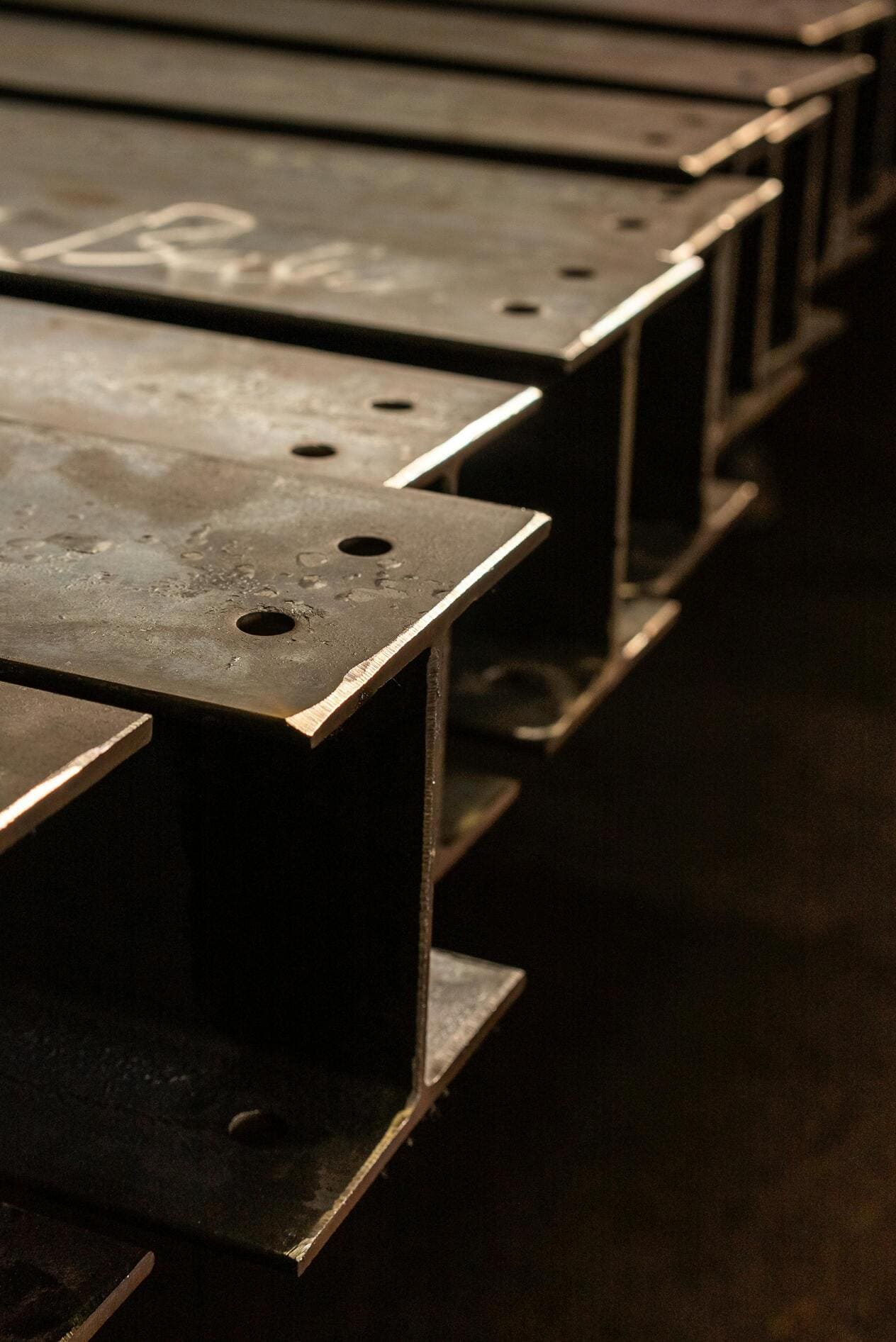
Mild steel plate from 5 to 150mm in E250 through E450 grades with A, BR and B0 quality classes to IS 2062, ASTM A36 and EN 10025. Ultrasonic lamination testing and EN 10204 3.2 certification available on request.
IS 2062 plate is specified by strength grade and by quality class, and buyers often state one and forget the other. The quality class governs impact toughness, which is what matters in cold service and dynamic loading.
For structures in cold climates or under dynamic load, specify the impact class explicitly. E250 A carries no impact requirement at all, and using it where toughness matters is a structural risk rather than a cost saving.
Plate is heavy and unforgiving. Flatness tolerance, cut edge condition and lamination are the three things that turn a compliant Mill Test Certificate into an unusable delivery.
For plate going into pressure vessels or critical welded structures, specify ultrasonic testing to detect laminations. They are invisible externally and cause weld failures that surface during fabrication.
On specifications: the figures above reflect standard industry specifications for this product. Your actual batch values are confirmed on the Mill Test Certificate or Certificate of Analysis issued against your specific lot — provided with every shipment, and with sample orders before you commit to bulk. We do not ask buyers to take a specification on trust.
Plate going into pressure vessels or EU construction carries documentation requirements beyond the standard set.
HS Code 7208 (hot rolled plate, width 600mm+) · 7225 (alloy steel plate). Heat number marked on each plate.
MOQ is discussed at order stage based on thickness and dimensions. Cut to size available. Payment by advance TT, LC at sight, or DP/DA case by case.
Grade is strength: E250, E350, E410 and E450 denote minimum yield strength in MPa. Quality class is impact toughness: A carries no impact requirement, BR requires impact testing at room temperature, and B0 at zero degrees Celsius. Both must be specified. Stating E250 alone leaves the toughness requirement undefined.
For structures in cold climates, under dynamic or cyclic loading, or wherever brittle fracture is a design concern. E250 A carries no impact requirement at all, so using it where toughness matters is a structural risk rather than a cost saving. Your structural engineer should specify the class, not procurement.
Lamination is an internal separation within the plate, typically from inclusions or porosity trapped during casting. It is invisible externally but causes weld failures and through-thickness cracking during fabrication. Ultrasonic testing detects it before the plate is cut, and is worth specifying for pressure vessels and critical welded structures.
State the flatness class per IS 1852 or EN 10029 rather than assuming. Plate that meets chemistry and mechanicals can still be commercially unusable if flatness is out of tolerance, particularly for plates going straight to CNC cutting or automated welding lines.
Flat-rolled products of iron or non-alloy steel, hot rolled, of a width 600mm or more, fall under HS Code 7208. Alloy steel plate falls under 7225. We declare the correct code based on the grade and width ordered.
Yes, on request. 3.2 requires validation by both the manufacturer and either the purchaser inspector or an authorised third party, and is typically required for pressure equipment under PED. It must be arranged before rolling, so specify it at enquiry stage.
Technical drawings welcome. FOB or CIF pricing within 24 hours. Third-party inspection available.
Technical drawings welcome. FOB or CIF pricing, samples available.
Request Quote → 💬 WhatsApp +91-9066444896