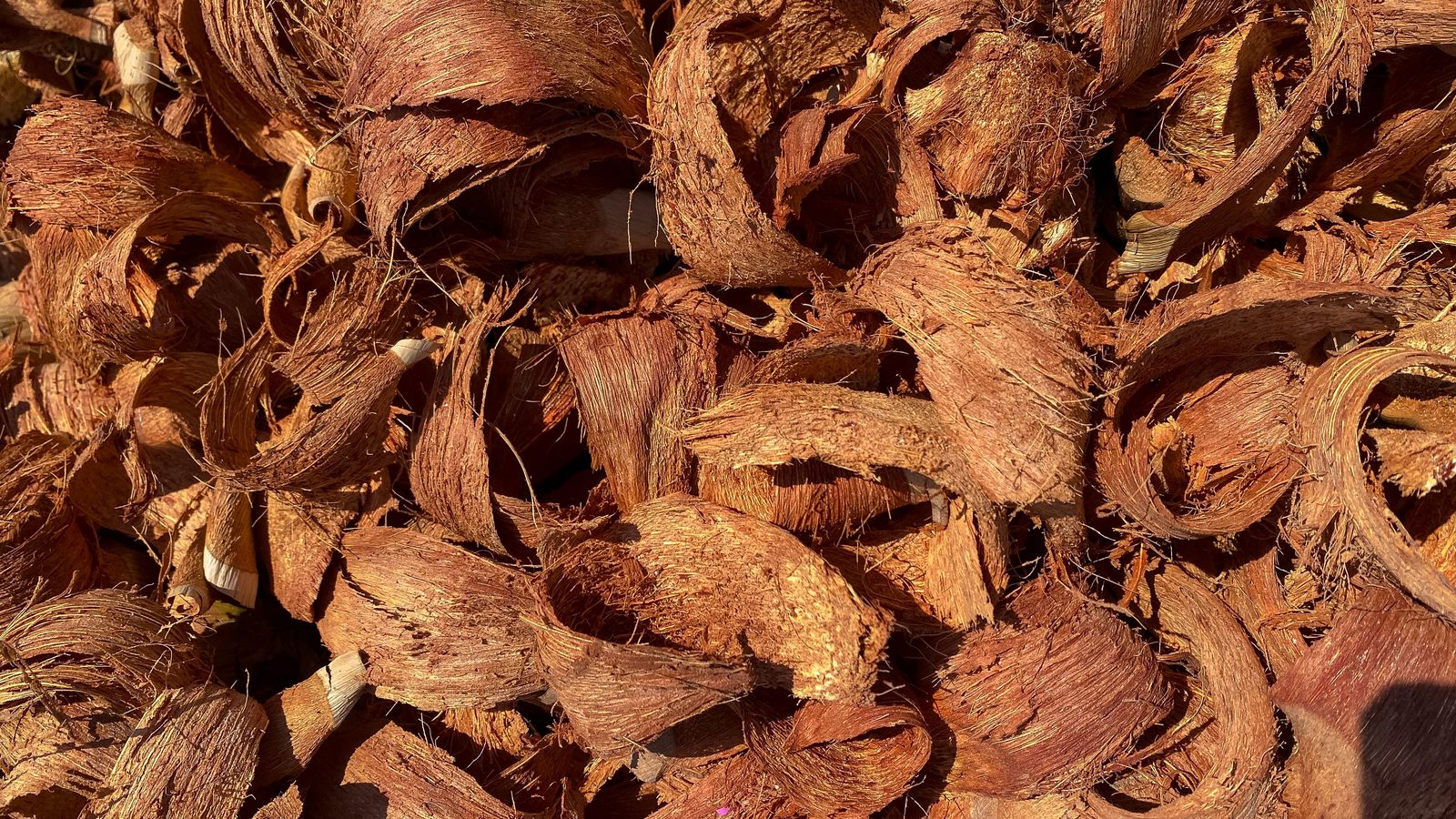
Why Chips, Not Peat
Coir chips and coco peat come from the same husk but do opposite jobs. Peat holds water; chips hold air. Growers use chips where the root zone needs oxygen more than it needs moisture reserve — orchids, anthuriums, and any crop prone to root rot in dense media.
Many growers blend the two: chips to open the structure, peat to retain moisture. If you are blending, state the ratio you want rather than buying each separately and mixing on site, which is harder to keep consistent.
Grades by Particle Size
Chip size determines both drainage rate and how long the medium holds its structure. Larger chips drain faster and last longer; smaller chips sit between chips and peat in behaviour.
Typical Specifications
The same EC and washing questions that apply to coco peat apply here. Raw unwashed chips carry the same sodium load.
On specifications: the figures above reflect standard industry specifications for this product. Your actual batch values are confirmed on a NABL-accredited Certificate of Analysis issued against your specific lot — provided with every shipment, and with sample orders before you commit to bulk. We do not ask buyers to take a specification on trust.
Documentation — Handled End to End
Growing media faces plant health scrutiny in most import markets. We prepare the full document set and hand over originals within 24 hours of the Bill of Lading date.
HS Code 5305.00. Many markets apply specific plant health rules to growing media — confirm your local requirement at enquiry stage.
How Ordering Works
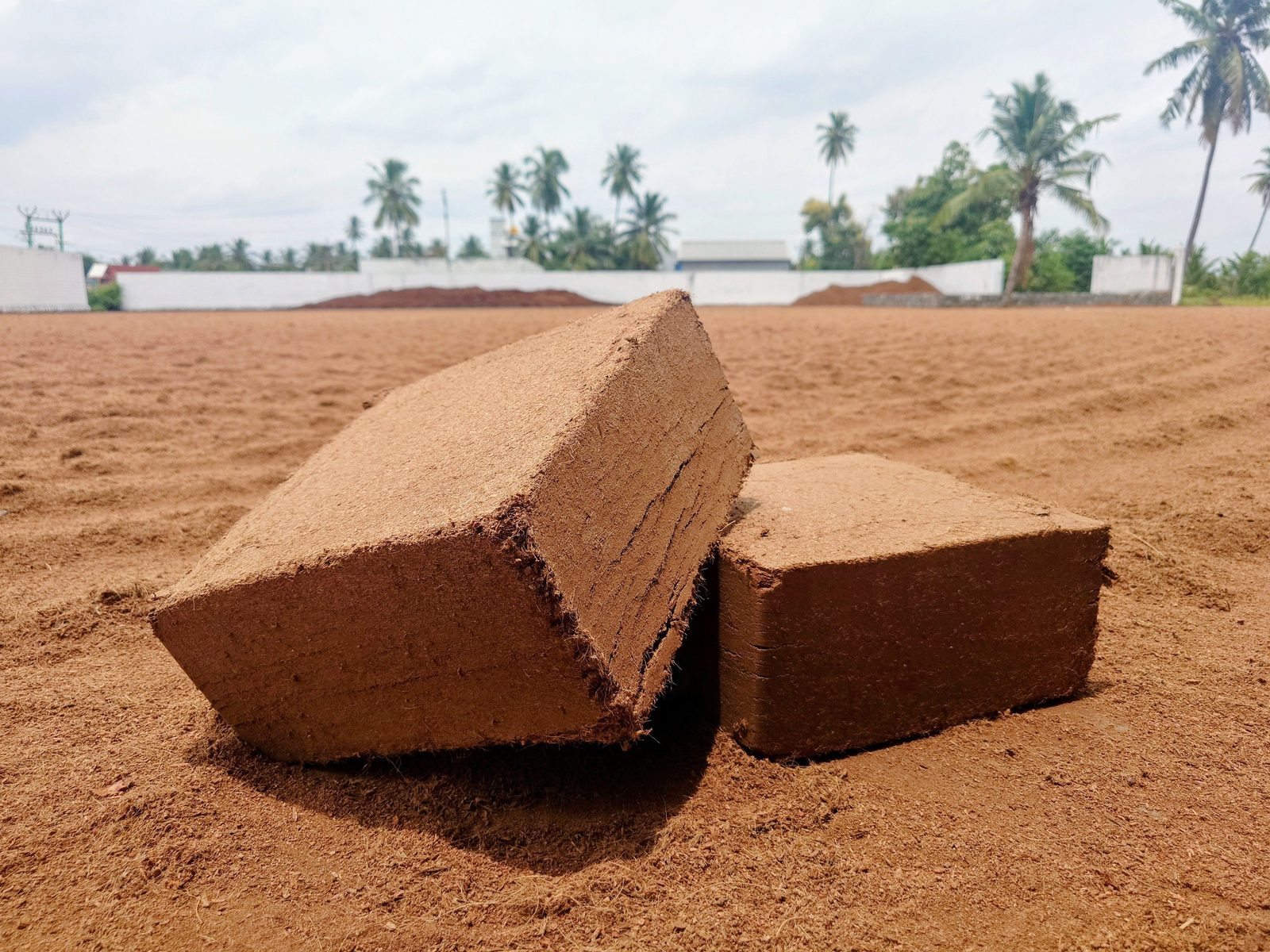
MOQ is discussed at order stage. Blocks and loose fill available, custom blends with coco peat on request. Payment by advance TT, LC at sight, or DP/DA case by case.
Buyer Questions
What is the difference between coir chips and coco peat?
They come from the same coconut husk but do opposite jobs. Chips provide air filled porosity and fast drainage; peat provides water holding capacity and retention. Chips are chosen where the root zone needs oxygen more than moisture reserve, which is why they dominate orchid and anthurium growing and any crop prone to root rot in dense media.
What chip size should I order?
Small chips at 6 to 10mm suit blending into peat and seedling work. Medium at 10 to 15mm is general potting. Large chips at 15 to 25mm are standard for orchids and epiphytes where maximum drainage is needed. Husk chunks above 25mm are used as a bottom drainage layer in large containers.
Can chips and coco peat be supplied pre-blended?
Yes, and it is usually better than blending on site. State the ratio you want and the blend is prepared to that specification, which keeps it consistent batch to batch. Mixing two separately purchased products on site is harder to control and introduces variation between batches.
Do coir chips need washing like coco peat?
Yes. Raw unwashed chips carry the same sodium and potassium load as unwashed peat, since both come from the same husk. Insist on EC below 1.0 mS/cm with a lot-matched test result for sensitive crops, and ask for sodium reported separately from EC on the Certificate of Analysis.
What HS code applies to coir chips?
Coconut coir and coir-based growing media, including chips, are exported from India under HS Code 5305.00. Many destination markets apply specific plant health requirements to growing media, so confirm your local rule at enquiry stage.
Can I get a sample with a COA before bulk?
Yes. Sample orders carry the same Certificate of Analysis standard as bulk shipments, covering EC, pH, sodium and particle size, so you can trial the medium in your own system before committing.
Source Coco Chips from India
Get a competitive FOB or CIF quote within 24 hours. Full documentation, third-party inspection available.
Related Products
FOB or CIF pricing, full documentation, samples available.
Request Quote → WhatsApp +91-9066444896Export Ready