Grades — What MG1 and Bulk Density Actually Mean
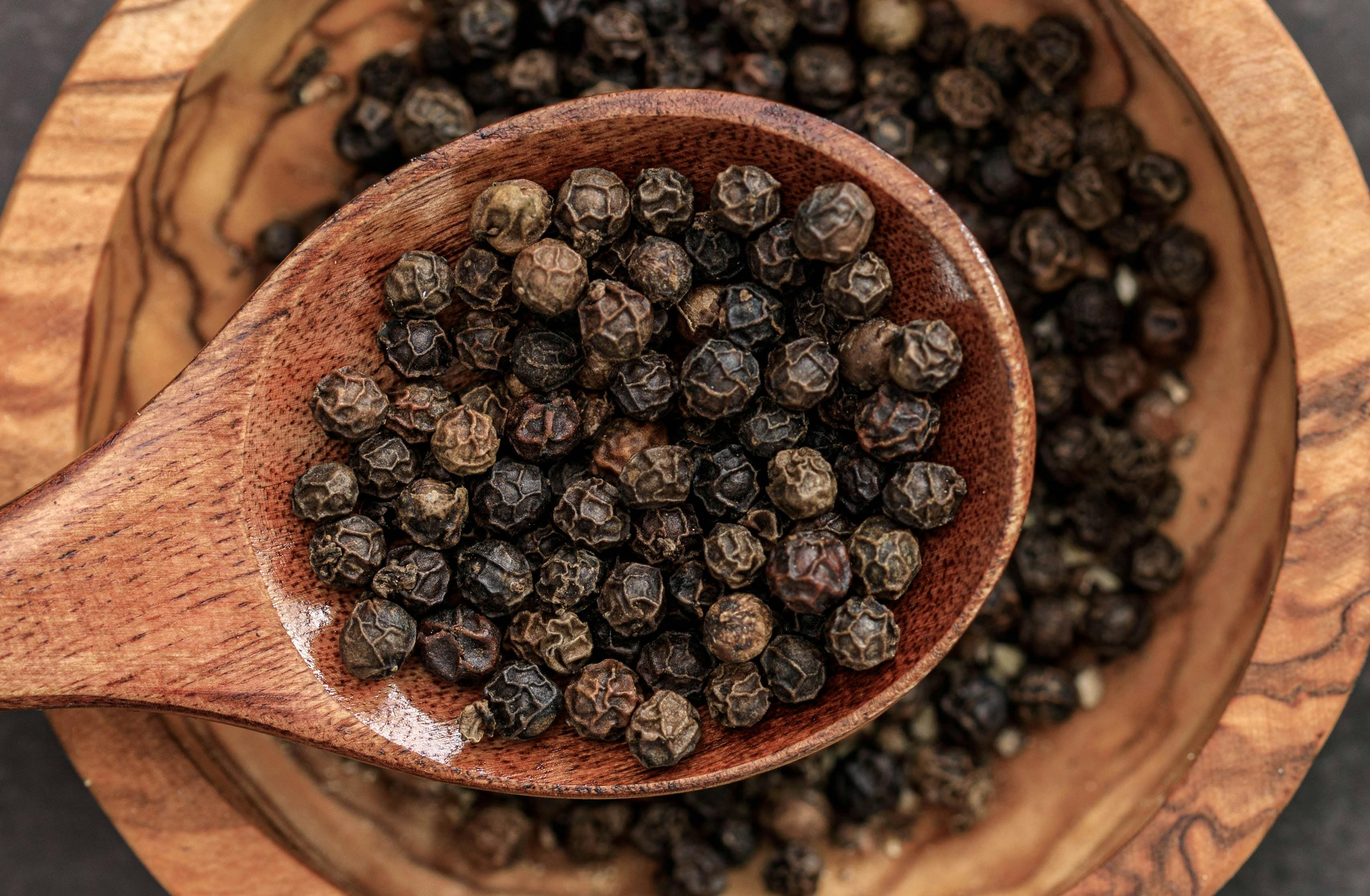
Black pepper is graded on bulk density measured in grams per litre. Higher density means heavier, denser berries with more piperine and better yield. MG1 — Garbled Grade 1 — is the international benchmark for cleaned, uniform pepper.
"Garbled" is a trade term meaning cleaned and sorted to remove stems, dust and light berries. It is not a quality complaint. Always specify grade and bulk density together — either one alone leaves room for interpretation.
Piperine — If You Are Extracting, Specify It
Piperine is the alkaloid responsible for pepper pungency and the basis of oleoresin value. Culinary buyers rarely specify it; extraction and nutraceutical buyers must.
If piperine content is commercially material to you, state a minimum on the contract. Bulk density alone is a proxy, not a guarantee.
Typical Specifications
On specifications: the figures above reflect standard industry specifications for this product. Your actual batch values are confirmed on a NABL-accredited Certificate of Analysis issued against your specific lot — provided with every shipment, and with sample orders before you commit to bulk. We do not ask buyers to take a specification on trust.
Documentation — Handled End to End
Spices Board OSCS certification is mandatory for spice exports from India to the EU. We prepare the full set and hand over originals within 24 hours of the Bill of Lading date.
HS Code 0904.11 (neither crushed nor ground) · 0904.12 (crushed or ground). Steam sterilisation available on request. Halal and Organic available on request.
How Ordering Works
MOQ is discussed at order stage based on grade and destination. Payment by advance TT, LC at sight, or DP/DA case by case.
Buyer Questions
What does MG1 mean in black pepper grading?
MG1 stands for Garbled Grade 1. "Garbled" is a trade term meaning the pepper has been cleaned and sorted to remove stems, dust and light berries. MG1 typically runs 550 to 570 grams per litre bulk density and is the international benchmark grade for premium black pepper. Ungarbled material is not cleaned to that standard and trades at a discount.
Why does bulk density matter when buying black pepper?
Bulk density, measured in grams per litre, indicates how dense and mature the berries are. Higher density generally correlates with higher piperine content and better yield in grinding or extraction. It is the primary commercial specification for black pepper, so always state both the grade and the target density rather than one alone.
What is piperine and when should I specify it?
Piperine is the alkaloid responsible for pepper pungency and the basis of oleoresin value, typically running 4 to 6 percent. Culinary buyers rarely specify it, but extraction and nutraceutical buyers should state a minimum on the contract. Bulk density is only a proxy for piperine, not a guarantee, so request HPLC testing where it matters commercially.
What HS code applies to black pepper?
Black pepper neither crushed nor ground is exported from India under HS Code 0904.11. Crushed or ground pepper falls under HS Code 0904.12. We declare the correct code on all shipping documents.
Is steam sterilised black pepper available?
Yes, on request. Steam sterilisation reduces microbial load without the residues associated with chemical treatment, and is frequently required by EU and US food manufacturers. It should be specified at enquiry stage, as it affects processing route and cost.
Can I get a sample with a COA before bulk?
Yes. Sample orders carry the same NABL-accredited Certificate of Analysis standard as bulk shipments, so you can verify bulk density, moisture, microbiology and pesticide results before committing.
Source Black Pepper from India
Get a competitive FOB or CIF quote within 24 hours. Full documentation, third-party inspection available.
Related Products

FOB or CIF pricing, full documentation, samples available.
Request Quote → WhatsApp +91-9066444896Export Ready