India — The World's Largest Ferromanganese Exporter
India leads the world in ferromanganese exports by shipment volume. According to Volza's Global Export Data, India accounts for 39,875 shipments of ferromanganese — compared to the second largest exporter, Zambia, at 2,877 shipments and Vietnam at 1,445. The scale of India's ferromanganese export infrastructure is without parallel.
This dominance is rooted in India's geological endowment. India holds the world's second largest manganese reserves after Zimbabwe — estimated at 430 million tonnes. The country produced 3.8 million metric tonnes of manganese ore in FY 2024-25, an increase of 11.8% year-on-year, and ranks as the world's fifth largest producer of manganese ore after South Africa, Gabon, Australia and China.
The primary buyers of Indian ferromanganese and manganese products are Japan, the USA, Germany, France and the UK — all major steel-producing or steel-consuming nations that have established long-standing supply relationships with Indian ferroalloy producers.
India's Manganese Ore Deposits — Where the Ore Comes From
India's manganese ore deposits are concentrated in five key states, each with distinct geological belts and ore quality characteristics.
Odisha is the largest producer of manganese ore in India and the primary source for ferroalloy smelters. The proximity of high-grade manganese ore deposits to ferromanganese processing facilities in the eastern Indian industrial belt is a key competitive advantage — reducing raw material logistics costs and supporting consistent year-round supply to export markets.
Why Ferromanganese is Indispensable in Steelmaking
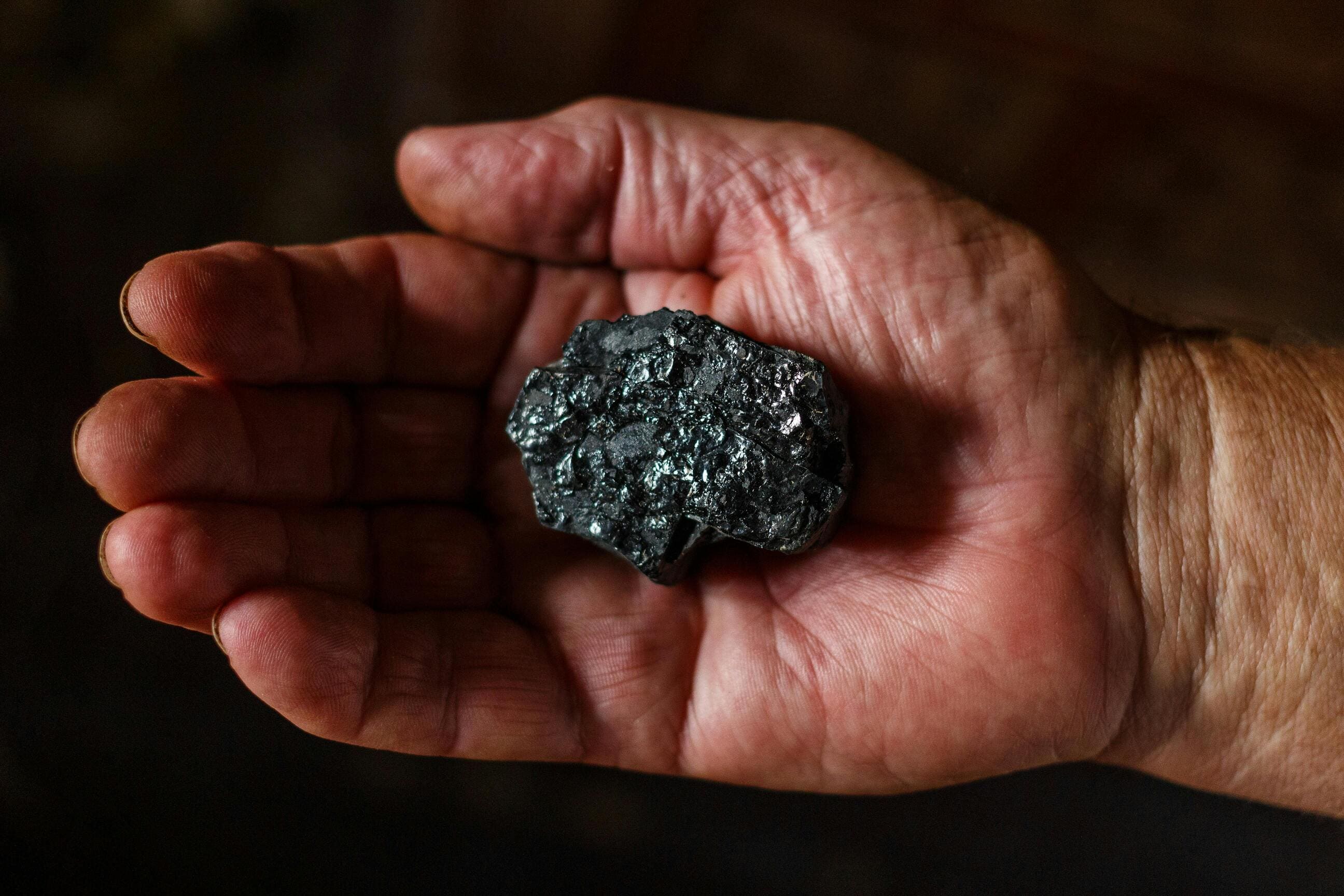
Ferromanganese is not optional in steel production — it is chemically essential. Every tonne of steel manufactured requires approximately 6 kilograms of manganese ore. Manganese performs three critical functions during steelmaking that no other element can replicate at comparable cost.
Deoxidation — Manganese reacts with dissolved oxygen in molten steel to form manganese oxide, which floats to the surface as slag. Without adequate deoxidation, steel develops blowholes, porosity and reduced mechanical properties.
Desulfurisation — Sulfur is a harmful impurity in steel that causes hot shortness and embrittlement. Manganese combines with sulfur to form manganese sulfide (MnS), which is removed with the slag. This process is fundamental to producing steels with good hot workability and ductility.
Global crude steel production reached approximately 1.95 billion tonnes in 2023, and the global ferromanganese market was valued at USD 16.27 billion in 2024. The steel industry consumes over 90% of all ferromanganese produced annually — a demand base that makes consistent, competitively priced supply from India strategically important for steelmakers worldwide.
Ferromanganese Grades — What Steelmakers Need to Know
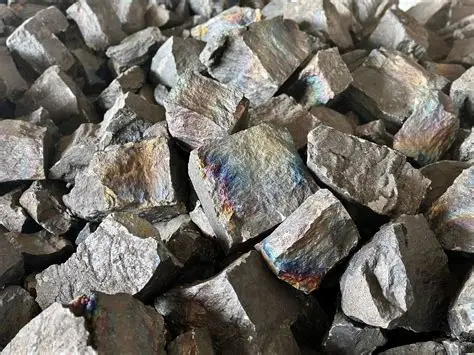
Ferromanganese is produced in three primary grades differentiated by carbon content. Each serves distinct steelmaking applications. Specifying the correct grade is critical to achieving target steel chemistry at the correct cost point.
High Carbon Ferromanganese (HC FeMn) is the dominant grade globally, accounting for over 65% of total ferromanganese production in 2023. It is the most cost-effective grade for standard carbon steel and rebar production. India's HC FeMn is produced primarily in Odisha and Chhattisgarh-based submerged arc furnaces and is available in 10–50mm lump size as standard.
Medium Carbon Ferromanganese (MC FeMn) is used where lower carbon input is required — primarily in stainless steel and rail steel production. Global production exceeded 1.1 million metric tonnes in 2023, with Japan, South Korea and Germany among the largest consumers due to their strong specialty steel sectors. Indian MC FeMn produced using CLU converter technology delivers phosphorus content as low as 0.06% and sulfur as low as 0.02%.
The global ferromanganese market is projected to grow from USD 16.27 billion in 2024 to USD 21.87 billion by 2030 at a CAGR of 5.4%, driven by sustained steel demand in construction, automotive and infrastructure development across Asia, Africa and the Americas.
India's Ferromanganese Production Landscape
India's ferromanganese industry is anchored by a combination of state-owned enterprises and private integrated producers. MOIL (Manganese Ore India Limited), a state-owned enterprise, is India's largest manganese ore producer and operates the country's only electrolytic manganese dioxide (EMD) manufacturing plant. In FY 2024–25, MOIL produced approximately 1.8 million tonnes of manganese ore — a record output that year.
In the private sector, major producers include Tata Steel, which in 2024 unveiled a next-generation ferromanganese alloy with low phosphorus and sulfur content targeting 100,000 metric tonnes output; Maithan Alloys Limited, one of India's largest ferro alloy producers; and Monnet Group, operating across 45 countries. The Indian ferromanganese market generated USD 378.9 million in revenue in 2024 and is projected to reach USD 558 million by 2030 at a CAGR of 6.6%.
Indian ferroalloy producers are increasingly adapting to global sustainability requirements. The Carbon Border Adjustment Mechanism (CBAM) now requires exporters to monitor, minimise and transparently report carbon emissions — and leading Indian manufacturers have responded by investing in low-energy furnace technologies and exploring biochar-based reductants as alternatives to conventional carbon sources.
Commercial Terms and Specifications
At Zenvico Global, we supply both HC and MC ferromanganese from Odisha-origin producers with full documentation on every shipment. Our standard commercial terms for international steelmakers:
Documentation on Every Shipment
At Zenvico Global, every ferromanganese shipment is accompanied by a complete documentation package prepared and dispatched digitally on the day of loading:
- Mill Test Certificate (MTC) — Confirming chemical composition including Mn, C, Si, P, S content on the specific lot shipped
- SGS / Bureau Veritas Inspection Certificate — Third-party pre-shipment inspection available on request confirming quantity and chemistry
- Radiation Certificate — Confirming the lot is free of radioactive contamination. Required by most destination ports and a standard inclusion on all Zenvico FeMn shipments
- Certificate of Origin — Issued by FIEO or Chamber of Commerce confirming Indian origin
- Commercial Invoice
- Packing List
- Bill of Lading — Original 3 copies plus 3 non-negotiable copies
The Global Steel Context — Why Demand for Indian FeMn is Growing
Global crude steel production reached approximately 1.95 billion tonnes in 2023 — the single largest demand driver for ferromanganese. Asia-Pacific contributed over 4 million metric tonnes of ferromanganese production in 2023, making it the largest regional producer and consumer. But the growth opportunity is not in Asia alone.
The Middle East and Africa are expanding steel production capacity significantly. Rapid urbanisation in Southeast Asia, infrastructure investment across Africa, and the automotive sector's demand for high-strength alloy steel are all driving sustained ferromanganese demand growth. The global ferroalloys market stood at USD 50.06 billion in 2023 and is expected to reach USD 71.05 billion by 2029 at a CAGR of 6.01%.
India's position as the world's largest FeMn exporter by shipment volume, combined with the second largest global manganese reserves and a competitive, well-established processing industry, makes it the most reliable long-term source for steelmakers seeking to diversify supply away from China and reduce logistics costs versus South African or Australian origins.
Get a Quote for HC or MC FeMn
Odisha origin. SGS inspection available. Radiation certified. MTC on every lot. FOB or CIF pricing within 24 hours.