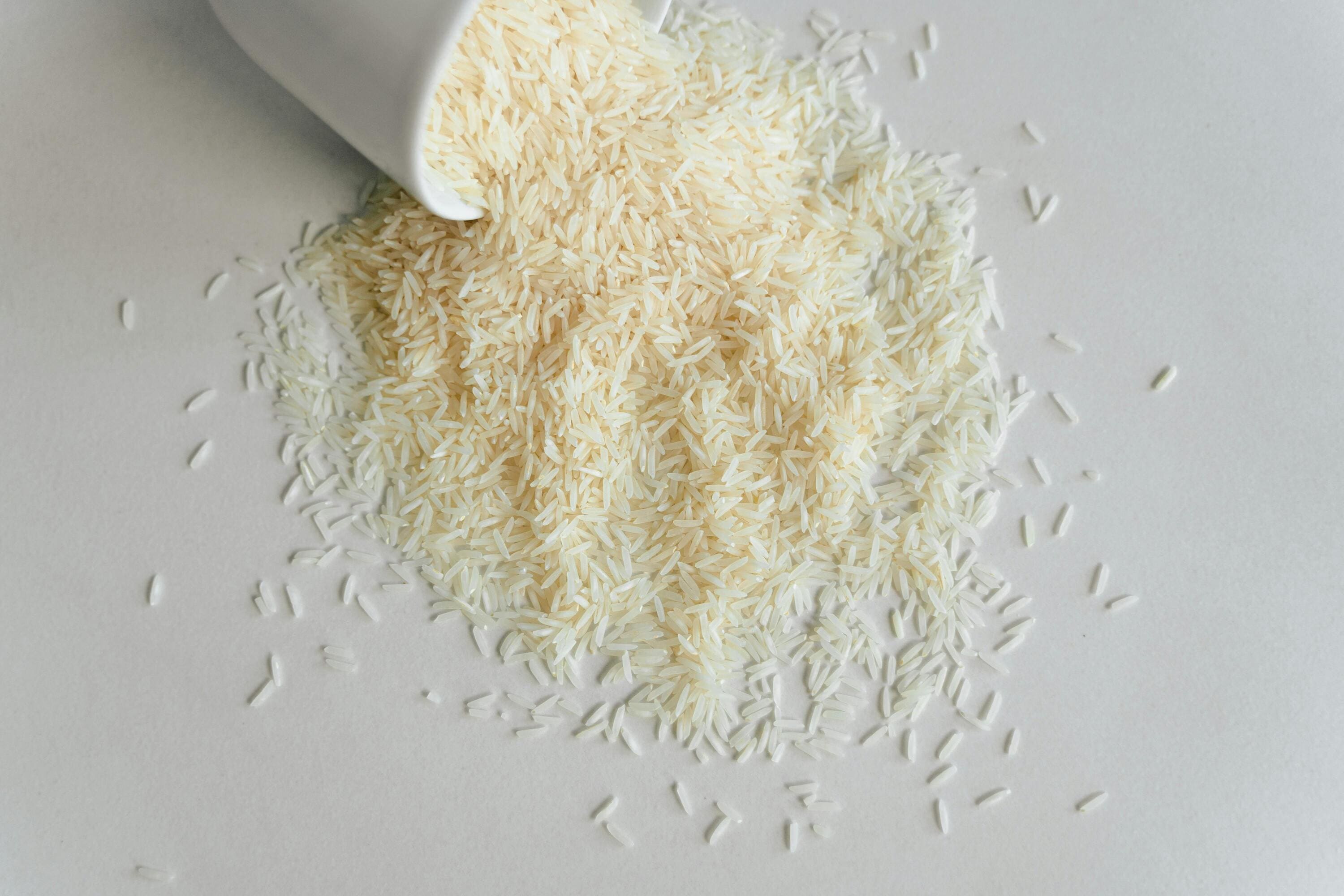
Grades — The 5% and 25% Standards
IR64 and other long-grain non-basmati rice trade on internationally recognised broken-percentage grades. "5% broken" and "25% broken" are the two benchmarks around which most global tenders and contracts are written.
The 5% and 25% grades are the international reference points. If you are responding to a tender, the grade will almost always be specified as one of these — agree the tolerance and the inspection basis before contracting.
Raw, Parboiled or Steam
Processing changes cooking behaviour and how well the grade survives transit. This decision matters as much as broken percentage for buyers on long routes.
Parboiled rice resists breakage and cooks non-sticky, which is why it dominates institutional catering and several West African markets. It also tolerates long transit better than raw rice.
Typical Specifications
On specifications: the figures above reflect standard industry specifications for this product. Your actual batch values are confirmed on a NABL-accredited Certificate of Analysis issued against your specific lot — provided with every shipment, and with sample orders before you commit to bulk. We do not ask buyers to take a specification on trust.
Documentation — Handled End to End
Volume rice contracts frequently require independent inspection at load port. We prepare the full document set and hand over originals within 24 hours of the Bill of Lading date.
HS Code 1006.30. Certificate of Origin for preferential tariffs. Packing from 5kg retail to 50kg bulk.
How Ordering Works
MOQ is discussed at order stage. Third-party inspection recommended on first contracts. Payment by advance TT, LC at sight, or DP/DA case by case.
Buyer Questions
What do the 5% and 25% broken grades mean?
They are the international reference grades for long-grain non-basmati rice, denoting the maximum percentage of broken grains in the lot. 5% broken is used for retail packing and quality food service; 25% broken serves institutional buyers, government tenders and volume trade. Most global rice contracts and tenders are written around one of these two benchmarks.
Should I buy raw or parboiled IR64?
Parboiled rice is soaked, steamed and dried before milling, which makes it non-sticky, raises cooking yield and helps it resist breakage in transit. That combination is why it dominates institutional catering and several West African markets. Raw rice is the standard milled product and suits general retail where transit distances are shorter.
How does IR64 compare to Sona Masoori?
IR64 is a long-grain economy rice with a neutral character, aimed at volume, institutional and tender business. Sona Masoori is a medium slender grain with a lighter texture, positioned mid-market and sold heavily to South Asian diaspora retail. IR64 competes primarily on price and grade compliance.
Is third-party inspection recommended?
Yes, particularly on first contracts and on tender business. Independent inspection at load port by SGS, Bureau Veritas or Intertek verifies broken percentage, moisture, weight and packing condition before the cargo sails, which removes most of the ground for disputes on arrival.
What HS code applies to IR64 rice?
Semi-milled or wholly milled rice, including IR64 and other non-basmati long grain, is exported from India under HS Code 1006.30. We declare the correct code on all shipping documents.
Can I get a sample with a COA before bulk?
Yes. Sample orders carry the same NABL-accredited Certificate of Analysis standard as bulk shipments, so you can verify broken percentage, moisture and pesticide results against your grade requirement before committing.
Source Non-Basmati Rice IR64 Parboiled Export from India from India
FOB or CIF quote within 24 hours. Full documentation, third-party inspection available.
Related Products
FOB or CIF pricing, full documentation, samples available.
Request Quote → 💬 WhatsApp +91-9066444896Export Ready